
Cellular Shades
The honeycomb shade that keeps drafty prewar windows warmer in winter and cooler in summer, with soft, even light all year.
- Insulating honeycomb design
- Light filtering or blackout fabrics
- Top-down/bottom-up, cordless or motorized
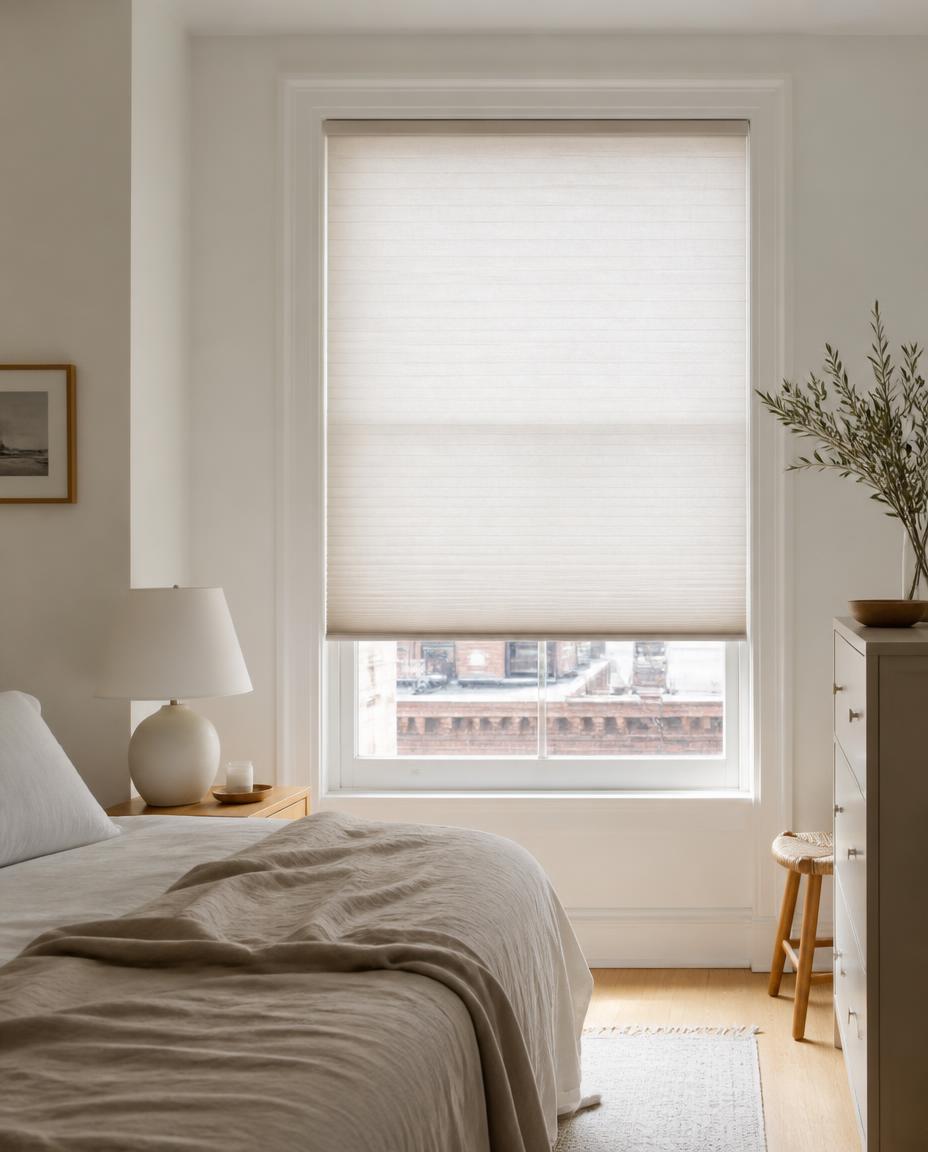
Why New Yorkers choose cellular shades
Insulation built in
The honeycomb cells trap air between your window and your room, helping with old, drafty windows and radiator-heated apartments.
Privacy from the top or bottom
With top-down/bottom-up, lower the shade from the top to get daylight while the street can’t see in.
Soft, even light
Light filtering cellular fabric glows instead of glaring. It also folds up small, so it stays out of your view when raised.
Are cellular shades right for you?
An honest guide. If cellular isn’t the best fit, we’ll tell you at your estimate.
Great for
- Drafty prewar windows that run cold in winter.
- Ground-floor and street-facing rooms, with top-down/bottom-up.
- Bedrooms and nurseries, with blackout cells.
- Sunny rooms that overheat in summer.
- Small windows, since they stack up very compactly.
Think twice if
- You want to see the view with the shade down. Solar shades keep the view.
- It’s for a bathroom or over a stove. Fabric can hold moisture and grease; faux wood blinds handle it better.
- You want a flat, modern look. Roller shades are sleeker.
Cellular shade questions
Do cellular shades really help with heating and cooling?
Yes. The cells trap air, which slows heat moving through the window. They make the biggest difference on older, drafty windows. Double cell and blackout versions insulate the most.
Should I get single or double cell?
Single cell is fine for most rooms. Choose double cell for drafty or street-facing windows where you want extra insulation and a bit less noise. We’ll bring both to compare.
What is top-down/bottom-up?
A shade you can lower from the top as well as raise from the bottom. Cover the lower part of the window for privacy while daylight still comes in above. It’s one of the most popular options in NYC apartments.
How do I clean cellular shades?
Dust them with a soft brush or a vacuum on low with a brush attachment. A hair dryer on the cool setting blows dust out of the cells. Spot-clean marks gently with a damp cloth.
Feel the difference on your own windows.
Book a free estimate